
Why Companies Are Rethinking Full AI Automation
In recent years, many companies rushed to adopt artificial intelligence, hoping to speed up operations, reduce costs, and automate as many tasks as possible. However, as AI usage has grown, it has become clear that even the most advanced systems cannot completely replace human expertise, judgment, and creativity. As a result, many organizations are re-evaluating their strategies and bringing humans back into critical parts of the workflow.
Here are a few examples:
Amazon
After heavily investing in warehouse automation and robotics, Amazon found that AI and automated systems are extremely useful for repetitive tasks, but human workers are still essential for handling unexpected situations, quality control, and complex decision-making. The most efficient operations combine both automation and human oversight.
As AI-generated content became more widely used, Google faced challenges with inaccurate or misleading responses produced by AI models. This highlighted the importance of human review and quality assurance, especially when information accuracy is critical.
Duolingo
The language-learning platform expanded its use of AI to create and manage educational content. While this increased efficiency, users reported issues with unnatural translations and contextual errors. As a result, human linguists and editors continue to play an important role in maintaining content quality.
IBM
After automating certain administrative and routine tasks, IBM recognized another challenge: reducing entry-level positions can weaken the pipeline of future talent. Junior employees are essential for knowledge transfer, training, and long-term organizational growth.
Starbucks
When experimenting with AI-powered order management and inventory systems, Starbucks discovered that automated tools can still make mistakes when interpreting customer requests or managing product availability. Human supervision remains necessary to ensure a smooth customer experience.
The Key Takeaway
These examples do not mean that companies are abandoning artificial intelligence. On the contrary, AI is advancing faster than ever and continues to transform industries around the world.
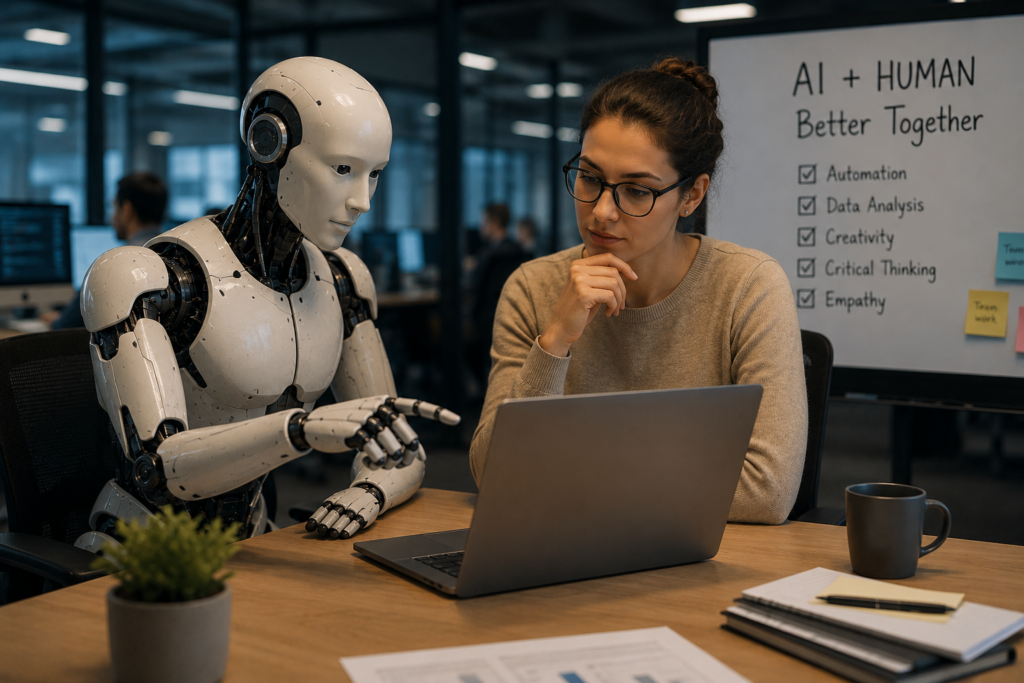
What is changing is the approach. Instead of trying to replace people entirely, businesses are increasingly adopting a Human-in-the-Loop model, where AI handles repetitive and data-intensive tasks while humans provide oversight, creativity, critical thinking, and final decision-making.
The future is not about humans versus AI—it’s about humans and AI working together to achieve better results than either could accomplish alone.
